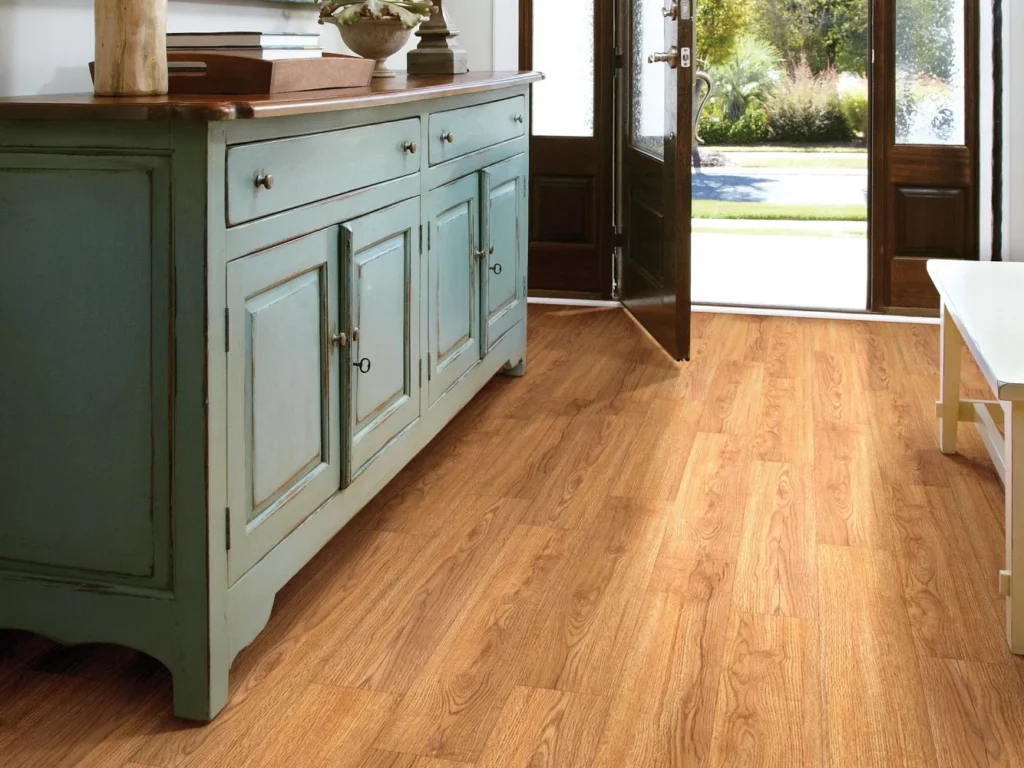
We hear this question often at our Greece and Webster stores. Homeowners want to skip the mess of tile removal and move straight to a fresh floor. That thinking makes complete sense, and in many cases, it is entirely doable. The answer depends on a few conditions our team checks before any installation begins.
Luxury vinyl plank is one of the most versatile flooring options we install at Christian Flooring and More. It handles moisture well, looks great in kitchens and bathrooms, and performs reliably in active Rochester homes. Even the best material, though, needs a solid surface underneath it to hold up the way it should over the years.
What Determines Whether LVP Over Tile Will Actually Work
Before recommending an overlay, our team looks at the condition of the existing surface, the depth of the grout lines, and how the height change will affect the rest of the room. These are not small details. Each one directly affects how the finished floor performs after installation is complete.
Skipping this assessment is where problems begin. Homeowners who rush past the prep stage often find their new floor shifting or separating within months. Taking the time to evaluate everything upfront saves money and prevents frustration down the road.
The Tile Must Be Fully Bonded and Stable
Loose or hollow tiles cannot stay under luxury vinyl plank. If any section shifts after the new floor goes down, the locking joints between planks will gradually work loose. The floor will start to feel unstable underfoot, and the problem only gets worse with foot traffic.
Our team taps and tests every area of the existing tile before committing to an overlay. Any tile that rocks, cracks, or sounds hollow has to come up first. A fully bonded surface is the single most important factor in whether this approach holds up for years or starts failing early.
Grout Lines and Surface Level Both Matter
Deep or wide grout lines create an uneven base that shows through thinner vinyl planks. When grout lines are pronounced, we apply a leveling compound to flatten the surface before laying the new floor. That extra step protects the finished result from developing soft spots or visible ridges later.
Surface level matters across the entire room, not just one section. Small height variations affect how the planks lock together and how the floor feels underfoot. Our team checks the full surface carefully before any material goes down to make sure the base is truly ready.
Floor Height Will Change and Needs Planning
Adding LVP over existing tile raises your finished floor height. That increase affects door clearances, transitions into adjacent rooms, and sometimes appliance fit in kitchens. These details need to be worked out before installation day, not discovered after the job is complete.
We address all of this during the consultation and planning phase. Our team measures clearances, checks every transition point, and flags anything that needs to be resolved ahead of time. That process keeps the project moving cleanly and ensures the finished floor works properly throughout your home.
When Tile Removal Is the Smarter Decision
Sometimes removing the tile is simply the better path forward. If the tile is cracked across multiple sections or if it sits over a damaged subfloor, going over it adds risk rather than removing it. Height gain that creates clearance problems with no clean solution is another reason to start fresh.
Working from a bare, prepared subfloor gives us a known foundation to build from. Rochester homes vary widely in age and construction history. Our team can tell quickly whether an overlay will hold long-term or whether removing the tile is the move that protects your investment.
Our Process From Consultation to Finished Floor
Every flooring project at Christian Flooring and More follows the same clear sequence. We start with a free consultation where we assess your space, check the existing surface condition, and give you honest material recommendations based on what we find. Nothing is rushed, and nothing is assumed.
From there, we move into design and material selection, then planning and scheduling, and finally professional installation with a full walkthrough at the end. Luxury vinyl plank is available in a wide range of styles at both our Greece and Webster stores, so you can see and feel the options in person before making any decisions.
Schedule Your Free Flooring Consultation Today
Not sure whether your existing tile qualifies for an overlay? Come in and let our team take a look. Christian Flooring and More serves Rochester and surrounding communities from two locations, and free estimates are available on all flooring services with no obligation.
Call our Greece store at (585) 352-1170 or our Webster store at (585) 216-1049. You can also reach us by email at christianflooring@gmail.com. We will evaluate your space, walk you through your options, and give you a clear plan you can move forward with confidently.
FAQs
Can LVP go over any existing tile?
Not without an inspection first. The tile must be fully bonded, stable, and level. Our team assesses the existing surface during consultation before recommending an overlay approach.
Will my floor height change after installation?
Yes. Adding LVP over tile raises your finished floor height. We check door clearances and room transitions during the planning phase, so nothing surprises you on installation day.
Do you offer free flooring estimates in Rochester?
Yes. Free consultations and estimates are available on all flooring services at both our Greece and Webster locations. Contact us to schedule yours.
What other flooring types do you install?
Beyond luxury vinyl, we install hardwood, ceramic tile, laminate, and carpet. Our design consultation helps you compare all options based on your room, lifestyle, and budget.