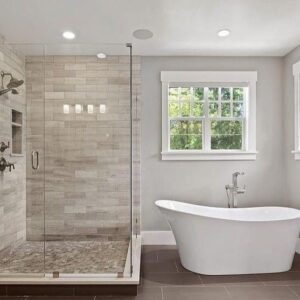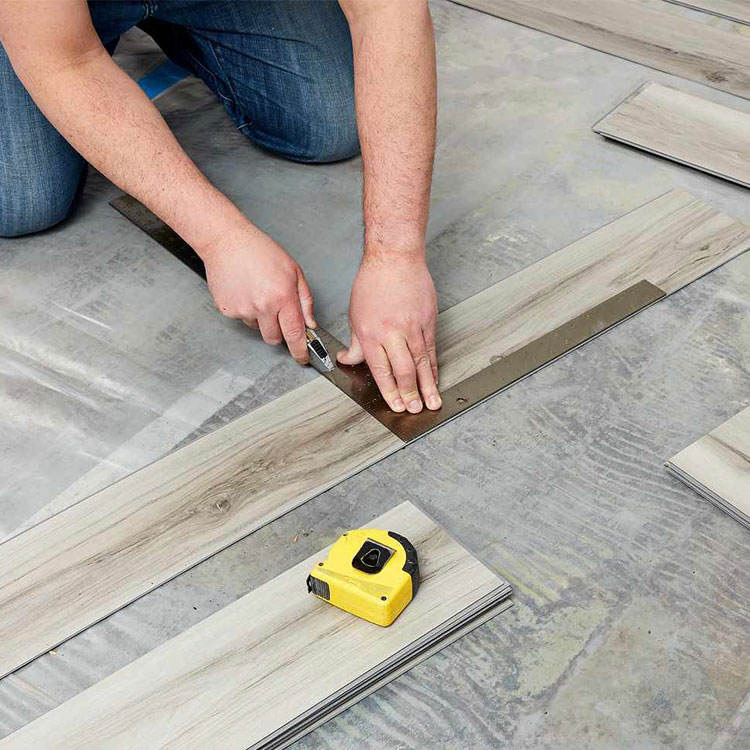
To coordinate flooring, cabinets, countertops, and paint successfully, we do not try to make every surface the same color. We build a hierarchy. At Christian Flooring & More, we start with the finishes that are hardest or most expensive to change, then use the more flexible finishes to connect them. That approach helps a kitchen, bathroom, or multi-room renovation feel intentional without becoming overly matched. The key is to compare undertones, visual weight, pattern, texture, and how one room transitions into the next. Flooring may continue through several areas, cabinets create a large vertical color block, countertops introduce pattern and movement, while paint can fine-tune the final relationship. When these decisions are made in the right order, each finish has a job instead of competing for attention.
Start With the Surfaces That Control the Largest Part of the Design
A practical approach is to give less flexible and visually prominent selections priority. In a kitchen, cabinetry and countertops occupy large areas and strongly influence the palette. Flooring may extend beyond the kitchen into dining or living spaces, so it can affect more than one room. Paint is usually easier to adjust later and therefore works well as a connecting finish.
Use Flooring to Establish Continuity
Flooring can be the strongest link between adjoining rooms. Our flooring services include hardwood, luxury vinyl, ceramic tile, laminate, and carpet, and each creates a different visual rhythm. If one flooring material runs through an open area, we look at how its tone works with cabinets and countertops before choosing paint.
Let Cabinets Define the Main Vertical Color
Cabinetry tends to sit at eye level, which gives it significant visual weight. During kitchen renovation planning, we consider cabinet color and style alongside countertop and backsplash selections. A cabinet finish does not have to match the floor. It only needs to relate to it through compatible undertones, contrast, or a deliberate neutral balance.

Coordinate Undertones Before You Coordinate Exact Colors
Two finishes can both be described as beige, gray, white, or brown and still clash because their undertones differ. We compare samples together under the room’s actual lighting whenever possible. Warm wood floors often read differently next to cool gray paint than they do beside warmer cream or greige tones. The same principle applies to white cabinets and light countertops.
Choose Contrast Intentionally
A cohesive design needs enough variation to keep the room from looking flat. Dark cabinets with a medium or light floor can create clear separation. Light cabinets can work with deeper counters or a more character-rich floor. The goal is not a formula, but a controlled contrast where one surface becomes the anchor and the others support it.
Avoid Competing Patterns
Pattern deserves the same attention as color. A countertop with strong veining, a floor with pronounced grain, and a busy backsplash can all be attractive individually but visually crowded together. We often let one or two surfaces carry the strongest movement and keep surrounding finishes quieter.
Treat Countertops as a Bridge Finish
Countertops can connect the cabinet color to the flooring because they sit physically between those surfaces. A countertop that contains subtle tones from both can help the room feel coordinated without creating an exact match.
Use Paint as the Final Connector, Not the First Commitment
Paint offers flexibility, so we prefer to select it after the larger fixed materials are understood. Once flooring, cabinets, counters, and major tile are chosen, the wall color can pull the palette together. This also helps prevent a common problem: choosing a favorite paint color first and then forcing every expensive finish to work around it.
Compare Paint in the Finished Material Context
Small color chips can be misleading. We recommend viewing paint candidates alongside cabinet, floor, countertop, and backsplash samples. Natural light, artificial lighting, and surrounding colors can shift how a paint color appears, so the relationship matters more than the name printed on the swatch.
Think Beyond One Room When the Flooring Continues
Open layouts and multi-room renovations require a broader view. If flooring continues from the kitchen into a dining or living area, we consider how the kitchen finishes relate to furniture, wall colors, and other visible spaces. Our complete home renovation and design consultation services allow us to plan these transitions as part of one visual system.
Repeat Elements Selectively
Cohesion does not require repetition everywhere. A cabinet hardware tone might reappear in lighting. A countertop undertone might relate to a nearby wall color. A flooring tone might be echoed in wood furniture. Small repetitions can create connection without making every room identical.
Build the Palette in a Practical Selection Order
For many projects, a practical sequence is to confirm layout and cabinet direction first, then flooring and countertops, followed by backsplash and major tile, and finally paint and smaller accents. The sequence can change depending on what already exists and what is being replaced, but the principle remains the same: define the least flexible decisions before the most flexible ones.
At Christian Flooring & More, our design consultation, flooring installation, kitchen renovation, and multi-room renovation services make it possible to evaluate these materials together. That is especially useful when you want the finished spaces to relate without copying one another.
Create a Cohesive Plan With Christian Flooring & More
If you are coordinating several finishes at once, bring samples, inspiration photos, and information about what is staying in the home. We can help you compare the materials as a complete palette and plan how flooring, cabinets, countertops, and paint will work across the spaces you are renovating.
Frequently Asked Questions
Do my floors need to match my cabinets?
No. We usually look for coordination through undertones, contrast, and visual balance rather than an exact color match.
Should I choose countertops before paint?
In most projects, it is practical to finalize major fixed finishes before paint because paint is easier to adjust around the completed material palette.
Can warm wood flooring work with white cabinets?
Yes, depending on the specific undertones and the countertop, backsplash, lighting, and paint choices used around them.
How many patterns should I use in one kitchen?
There is no fixed number. We focus on preventing several strong patterns from competing, especially across flooring, countertops, and backsplash.
What if my flooring continues into several rooms?
We treat the flooring as a connecting element and coordinate visible wall colors, cabinetry, and finishes across the adjoining spaces.
Can Christian Flooring & More help with the full material palette?
Yes. Our design consultation services include material selection, color coordination, flooring planning, and coordinated design for kitchens and larger renovations.